
1. Introduction
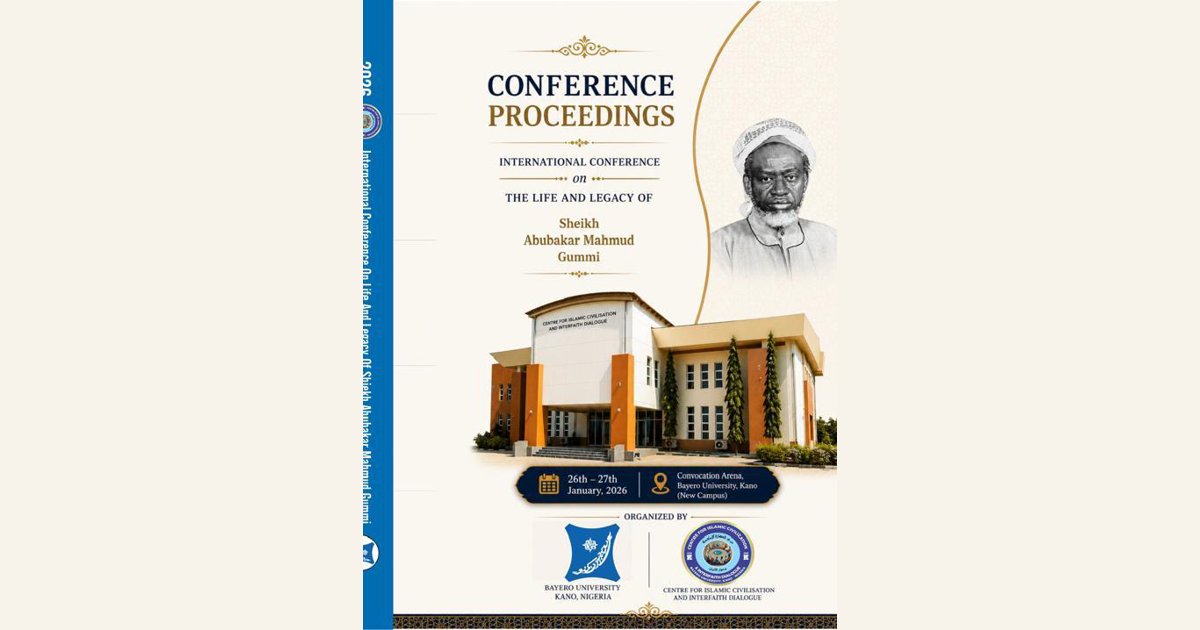
Sheikh Abubakar Mahmud Gumi (1924-1992) stands as a towering figure in the intellectual and religious landscape of twentieth-century Nigeria. A distinguished Islamic scholar, Grand Khadi of the Northern Region, and a vocal advocate for Islamic reform, Gumi’s influence extended far beyond religious discourse, deeply impacting the political and socio-economic fabric and advancement of the Muslim ummah. This paper aims to delve into the progressive mind and enduring legacy of Sheikh Abubakar Mahmud Gumi, specifically examining his contributions and perspectives on the political economy and international development within the Muslim world. By analyzing his thoughts and actions, this research seeks to illuminate how Gumi’s vision, rooted in classical Islamic principles, provided a framework for addressing the complex challenges faced by Muslim societies in the modern era.
The contemporary Muslim world is grappled with issues of political instability, economic disparities, social injustices and the imperative for sustainable development. The insights of scholars like Sheikh Gumi, who championed a holistic understanding of Islam encompassing both spiritual and temporal dimensions, become profoundly relevant in addressing these mountain of persistent socio-political and economic difficulties. Gumi’s insistence on the inseparability of religion (dīn) and state (daūlah), his emphasis on the sovereignty of Allah as the ultimate source of authority, and his advocacy for ethical and just governance, offer a compelling counter-narrative to secular paradigms that often marginalize the role of faith in public life. This paper will argue that Gumi’s progressive approach, characterized by his call for active Muslim participation in politics and his vision for an equitable society guided by Islamic tenets, laid foundational ideas for a distinct Islamic political economy and contributed significantly to the discourse on international development within the Muslim world. To provide a rigorous analytical lens for this argument, this paper employs the theoretical framework of Moral Political Economy (MPE). Drawing upon a textual analysis, this paper will first provide an overview of Sheikh Gumi’s life and intellectual contributions. Subsequently, it will explore his core ideas concerning politics and governance, highlighting his rejection of secularism and his advocacy for an Islamic political system. The paper will then contextualize Gumi’s views within the broader theoretical frameworks of political economy and international development, examining the challenges and opportunities prevalent in Muslim-majority countries. Finally, it will discuss the enduring relevance of Sheikh Gumi’s legacy for contemporary efforts to foster good governance, economic prosperity, and social justice in the Muslim world, demonstrating how his progressive mind continues to offer guidance for navigating the complexities of the 21st century. 2. Literature Review The existing scholarship on Sheikh Abubakar Mahmud Gumi is diverse, reflecting his many sided contributions as an Islamic scholar, jurist, and social reformer. Much of the available literature about Sheikh Gumi, acknowledges his pivotal role in the Islamic reform movement in Northern Nigeria and his efforts to promote a holistic understanding of Islam as an encompassing religion. However, a comprehensive analysis of his contributions specifically within the frameworks of political economy and international development, remains an area ripe for deeper exploration. Early biographical accounts and scholarly analyses, such as those by Paden (1986) and other contemporary Nigerian scholars, often highlight Gumi's intellectual prowess and his commitment to Islamic education and da'wah (preaching). These works typically chronicle his life journey, his educational background, and his rise to prominence as a leading voice in Nigerian Islam. They frequently emphasize his advocacy for the Sunnah and his critiques of traditional practices that he perceived as deviations from authentic Islamic teachings. While these studies provide essential background, they tend to focus more on his religious and jurisprudential contributions rather than a detailed examination of his political and economic thought.
More recent academic endeavors have begun to explore Gumi's political philosophy. For instance, Jangebe (2024) provides an assessment of Gumi's thoughts on politics and governance in Nigeria, asserting that Gumi viewed Islam as a comprehensive code encompassing all aspects of life, thereby rejecting the Western notion of separating religion and state. This perspective is central to understanding Gumi's approach to political economy, as he believed that a just society and a thriving economy could only be achieved through the implementation of divine laws. Jangebe's work highlights Gumi's conviction that politics without the guiding principles of Islam inevitably leads to corruption and societal decay. Similarly, Muhammad and Umar (2025) delve into Gumi's perspective on ethical leadership and its relevance to contemporary Nigerian politics, reinforcing the idea that Gumi's vision for governance was deeply rooted in Islamic ethics and accountability. These studies collectively establish Gumi as a significant figure in Islamic political thought, whose ideas transcended mere religious instruction to encompass a broader vision for societal order. While the autobiography of Sheikh Gumi "Where I Stand" provides a personal narrative of his experiences and interactions with political and economic leaders, its reflections on the themes of political economic development and international relations within the Muslim world is less pronounced, which require careful extraction and interpretation. The book implicitly reveals Gumi's concern for the welfare of the Muslim community, his advocacy for justice, and his belief in the transformative power of Islamic principles to uplift societies. For example, his interactions with various leaders and his observations on the socio-economic conditions of Nigeria, as recounted in the book, offer glimpses into his practical approach to development, even if not explicitly articulated as a formal primary source for understanding specific ideas on existing economic and political theory.
At the same time, the broader literature on political economy and international development in the Muslim world offers a crucial contextual framework for analyzing Gumi's contributions. Scholars in this field examine the unique challenges and opportunities faced by Muslim-majority countries, including issues of governance, economic inequality, conflict, and the role of Islamic finance and institutions in fostering development. Works by authors such as Chapra (2008) and Iqbal and Mirakhor (2013) explore the theoretical underpinnings of Islamic economics and its potential to address contemporary economic problems.
These studies stress the ethical dimensions of Islamic economic principles, such as the prohibition of usury (riba), the emphasis on social justice, and the importance of wealth distribution through mechanisms like zakat and waqf. By integrating Gumi's ideas with these broader discussions, this paper aims to bridge a gap demonstrating how his vision aligns with and contributes to the ongoing discourse on sustainable and equitable development in the Muslim world.
This literature review, seek to sets the stage for a deeper exploration of Sheikh Abubakar Mahmud Gumi's progressive mind and legacy. While existing scholarship has illuminated various facets of his life and thought, this paper specifically seeks to synthesize insights from stands and ideas with established theories of political economy and international development, thereby offering a novel perspective on his enduring relevance to the challenges and aspirations of the Muslim world.
2.1 Theoretical Framework This paper adopts the theoretical framework of Moral Political Economy (MPE) to provide an analytical foundation for understanding Sheikh Abubakar Mahmud Gumi's contributions to Political Economy and International Development in the Muslim World. This approach is essential because Gumi's intellectual project is fundamentally normative, seeking to establish an economic and political system based on divine moral principles rather than purely utilitarian or materialist considerations. Moral Political Economy is a school of thought that challenges the separation of economics from ethics, politics, and social values. It posits that economic systems are not autonomous spheres governed solely by market logic, but are deeply embedded within a society's moral and institutional framework (Polanyi, 1944). Unlike neoclassical economics, which assumes rational self-interest as the primary driver, MPE emphasizes that economic behavior is shaped by concepts of justice, fairness, and social obligation. The central tenet of MPE is that the economy must serve the moral and social goals of the community, and not merely maximize profit or efficiency. This framework is uniquely suited to analyze Gumi's legacy for three primary reasons:
1.Critique of Exploitation: MPE provides the language to analyze Gumi's vehement rejection of Riba (usury). His stance is a classic moral critique of a market practice, arguing that the predetermined, guaranteed return on a loan is inherently exploitative and violates the moral imperative of risk-sharing and social solidarity. This aligns with MPE's focus on identifying and challenging economic practices that lead to injustice and inequality.
2.Economic Embeddedness: Gumi's core principle of Dīn wa Daūlah (the inseparability of religion and state) is a direct expression of economic embeddedness. It asserts that the political and economic spheres must be governed by the overarching moral and legal framework of Islam. MPE allows us to analyze how Gumi sought to institutionalize this moral vision through mechanisms like zakat and waqf, which are designed to ensure the economy serves the community's moral objectives of social justice and poverty alleviation.
3.Normative Goal: The ultimate goal of Gumi's work is to provide a blueprint for a just, equitable, and prosperous Muslim society is fundamentally a normative project. MPE, as a normative theory, allows for the evaluation of economic systems based on their ethical outcomes, providing a powerful lens to assess the enduring relevance of Gumi's vision for sustainable development and good governance in the Muslim world.By employing the MPE framework, this paper moves beyond a simple historical description to offer a rigorous analytical interpretation of Sheikh Gumi's thought as a coherent and principled model for a moral economy. 3. Sheikh Abubakar Mahmud Gumi's Progressive Mind and Legacy Sheikh Abubakar Mahmud Gumi's intellectual journey and public life were characterized by a progressive outlook that sought to revitalize Islamic practice and thought in the context of modern challenges. His autobiography, "Where I Stand," serves as a testament to this forward- thinking approach, revealing a scholar deeply committed to the welfare of the Muslim community and the broader society. Gumi's progressive mind was evident in his willingness to engage with contemporary issues, his emphasis on direct engagement with the Qur'an and Sunnah, and his pragmatic approach to political and economic realities. 3.1. The Inseparability of Religion and State (DīnwaDaūlah) One of the most foundational aspects of Gumi's progressive thought was his unwavering conviction in the inseparability of religion and state.This principle is the cornerstone of his Moral Political Economy (MPE), asserting the embeddedness of the economic system within a divine moral framework (Polanyi, 1944). Gumi vehemently rejected the Western-imposed notion of secularism, arguing that Islam, as a comprehensive way of life, provides guidance for all aspects of human existence, including governance and economic affairs (Jangebe, 2024). For Gumi, the Qur'an and the Sunnah of the Prophet Muhammad (p.b.u.h) offered a complete framework for establishing a just and equitable society. He believed that any attempt to compartmentalize Islam, relegating it solely to personal worship while excluding it from public life, was a distortion of its true essence. This perspective is clearly articulated in "Where I Stand," where he reflects on the historical trajectory of Islamic civilization, emphasizing how early Muslim communities thrived under a system where religious and political authority were intertwined. "Islam refers to a comprehensive code that comprises all aspects of Muslim life concerning worldly affairs and the hereafter. In contrast to other religions, the separation of religion and the state is inconceivable for many. In Islam, the Qur`an uses the word dīn (religion) to describe both worldly lives and the hereafter... The secular norms of the separation between religion and politics are not only misleading but wrong." [2, p. 419] This belief formed the bedrock of his political activism. He saw the political arena not as a realm separate from religious duty, but as a crucial sphere for implementing divine injunctions and ensuring justice. His progressive stance was in advocating for active Muslim participation in the political process, rather than withdrawal, to shape policies in line with Islamic principles. This was a significant departure from some traditional views that might have favored quietism or disengagement from the state. 3.2. Advocacy for Ethical Governance and Justice Gumi's progressive mind was also manifested in his relentless advocacy for ethical governance and social justice. This manifested within the Moral Political Economy (MPE) framework, that popularize for the primacy of social justice as the ultimate goal of the state, overriding purely economic efficiency (Polanyi, 1944). Gumi consistently emphasized that leadership in Islam is a trust (amanah) and that rulers are accountable to Allah and to the people. He believed that corruption, tyranny, and the mismanagement of public funds were direct consequences of a political system divorced from religious morality (Muhammad and Umar, 2025). In "Where I Stand," he recounts instances where he challenged authority and spoke truth to power, driven by his conviction that justice is a cornerstone of Islamic society. His vision for governance was not merely theoretical, it was deeply practical. He called for leaders who possessed piety, knowledge, and a genuine concern for the welfare of the populace. He believed that the implementation of Islamic law (Shari'ah) was essential for fostering a society free from exploitation and injustice. This progressive stance on governance was particularly relevant in post-colonial Nigeria, where issues of corruption and political instability were rampant. Gumi's voice served as a moral compass, urging for a return to principles of accountability and transparency. 3.3. Economic Thought and Social Welfare While Sheikh Gumi may not have presented a systematic treatise on economic theory, Gumi's reflections implicitly reveal a profound concern for economic justice and social welfare, which are central to Islamic economic thought. His emphasis on the equitable distribution of wealth, the idea of what constitutes riba or usury (riba), and the importance of charity (zakat) and endowments (waqf) as mechanisms for social solidarity aligns with the core tenets of Islamic political economy (Iqbal and Mirakhor, 2013). He understood the imperative of economic inclusion in the Muslim world and how economic disparities could lead to social unrest and undermine the stability of the Muslim community. His progressive approach to economic matters was rooted in the Islamic concept of tawhid (oneness of God), which implies that all resources ultimately belong to Allah and humans are merely trustees. This worldview necessitates an economic system that prioritizes human needs over excessive accumulation of wealth and promotes a balanced approach to material prosperity. This approach is evidenced in his public pronouncements and private actions, he believed that a truly Islamic society would ensure that basic necessities are met for all its members and that opportunities for economic advancement are accessible. 3.4. Education and Intellectual Development A key aspect of Gumi's progressive legacy was his tireless efforts in promoting education and intellectual development. He recognized that knowledge was fundamental to the advancement of the Muslim community, both religiously and socio-economically. His own journey, from traditional Islamic schooling to Western education, exemplified his belief in the importance of acquiring diverse forms of knowledge. He championed the establishment of Islamic schools and institutions that would produce scholars capable of engaging with modern challenges while remaining firmly rooted in Islamic tradition. Gumi so often highlights the importance of critical thinking and independent reasoning (ijtihad) in addressing contemporary issues. He encouraged Muslims to seek knowledge from all sources, provided it was beneficial and did not contradict Islamic principles. This open-minded approach to learning was crucial for fostering a generation of Muslims who could contribute meaningfully to the political, economic, and social development of their nations. His emphasis on education as a tool for empowerment and societal transformation marks him as a true progressive, whose vision extended beyond mere religious observance to encompass a holistic understanding of human flourishing. Sheikh Abubakar Mahmud Gumi's progressive mind and enduring legacy are characterized by his holistic understanding of Islam, his unwavering commitment to ethical governance and social justice, his implicit advocacy for an equitable economic system, and his profound belief in the transformative power of education. These interconnected themes, woven throughout his public life, provide a rich foundation for understanding his significant contributions to the political economy and international development of the Muslim world. 4. Political Economy and International Developmentin the Muslim World
The Muslim world, a vast and diverse geopolitical entity, presents a complex landscape of political economies and varying stages of international development. Understanding this context is crucial for appreciating the relevance and foresight of Sheikh Abubakar Mahmud Gumi's ideas.While some Muslim-majority nations have achieved significant economic progress, many continue to grapple with persistent challenges that hinder their sustainable development. These challenges often stem from a confluence of historical, political, economic, and social factors. 4.1. Challenges in Political Economy Several interconnected challenges characterize the political economy of many Muslim countries. A significant issue is the prevalence of authoritarian governance and weak institutions. Many nations in the Muslim world have experienced prolonged periods of autocratic rule, which has often led to a concentration of power, limited political participation, and a lack of accountability. This environment can stifle economic growth by fostering corruption, and hindering the development of robust legal and regulatory frameworks (Ebrahim and Sheikh, 2018). The absence of strong, transparent institutions undermines trust, distorts economic participations, and impedes the equitable distribution of resources. Economic inequality and widespread poverty remain pervasive problems. Despite some Muslim countries being rich in natural resources, particularly oil and gas, the benefits of this wealth often do not trickle down to the broader population. This leads to significant disparities in income and opportunity, exacerbating social
References
Chapra, M. U. (2008). Islam and the Economic Challenge. Islamic Foundation.
Ebrahim, M. S., & Sheikh, M. (2018). The political economy and underdevelopment of the Muslim world: A juridico-philosophical perspective. Arab Law Quarterly, 32(4), 385-408.Ogutcu, M. (2024). The Vicious Cycle of Poverty and Violence in the Islamic World. Global Panorama.
Gumi, A. M., &Tsiga, I. A. (1992). Where I Stand. Spectrum Books.
Iqbal, Z., &Mirakhor, A. (2013). Economic Development and Islamic Finance. World Scientific Publishing Company.
Jangebe, H. A. (2024). Islamic Political Thought: An Assessment of Sheikh Abubakar Mahmud Gumi`s Thought on Politics and Governance in Nigeria. ISRG Journal of Arts, Humanities and Social Sciences, II(V), 419-425.
Muhammad, B., & Umar, A. A. (2025). Islamic ethical leadership: Sheikh Abubakar Gumi’s perspective on governance and its relevance in contemporary Nigerian politics. SSR Journal of Arts, Humanities and Social Sciences, 2(3), 121-126.
Paden, J. N. (1986). Ahmadu Bello, Sardauna of Sokoto: Values and Leadership in Nigeria. Zaria: Hudahuda Publishing Company
Pryor, F. L. (2007). The economic impact of Islam on developing countries. World Development, 35(11), 1815-1835.
Polanyi, K. (1944). The great transformation. New York, NY: Farrar & Rinehart.
Comments